
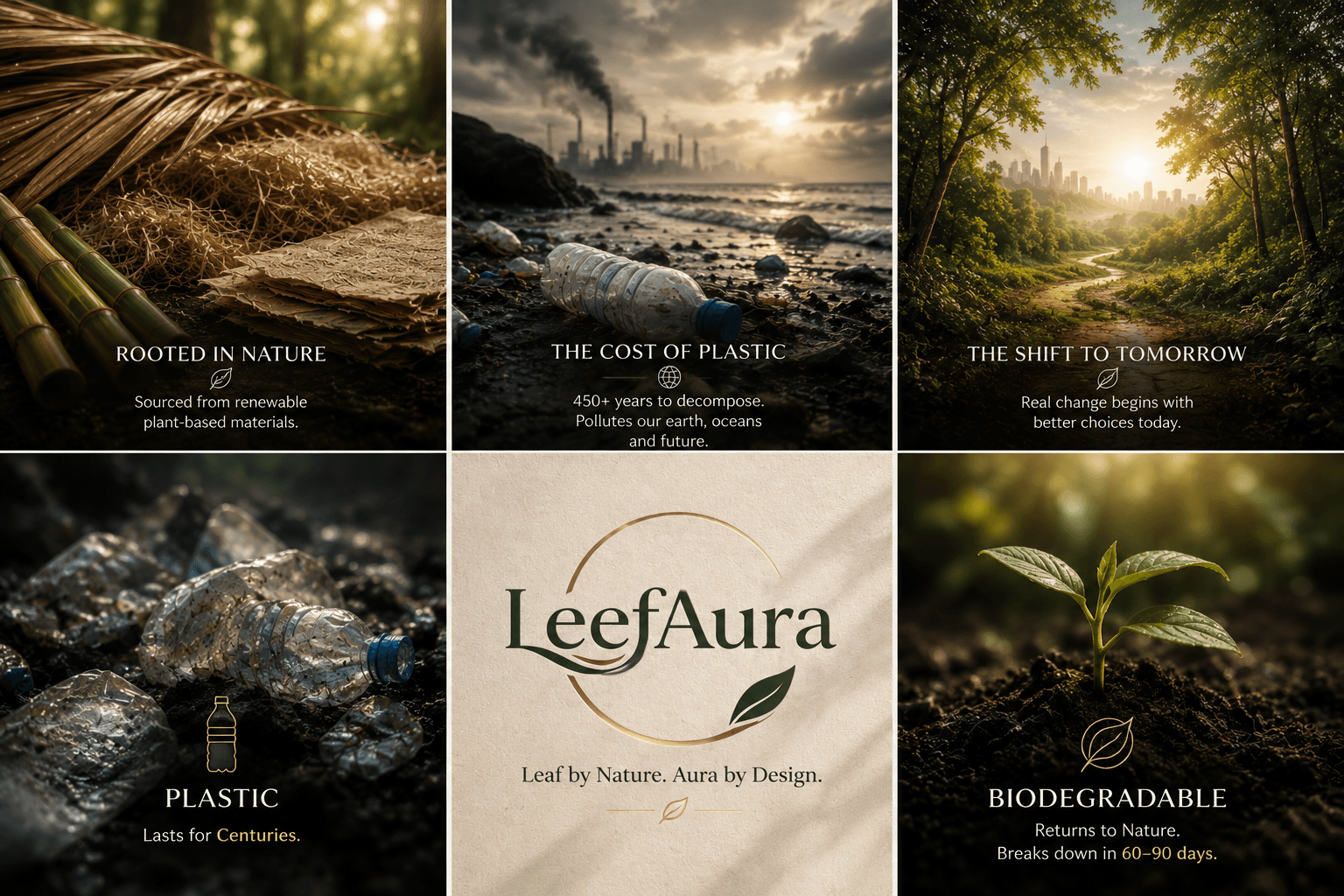
As businesses and consumers become more environmentally conscious, the debate between plastic and biodegradable materials is more important than ever. While plastic has long been favored for its durability and low cost, its environmental impact is significant and long-lasting.
Plastic products can take hundreds of years to decompose, often breaking down into microplastics that pollute oceans, soil, and even the food chain. This leads to severe consequences for marine life, wildlife, and human health. Additionally, plastic production relies heavily on fossil fuels, contributing to carbon emissions and climate change.
On the other hand, biodegradable products are designed to break down naturally within a short period—typically 60 to 90 days under the right conditions. Materials like areca palm leaf, paper, and wood decompose into organic matter without leaving harmful residues. This significantly reduces landfill waste and environmental pollution.
However, not all biodegradable products are equal. Their effectiveness depends on proper disposal conditions such as composting environments. When managed correctly, they offer a far more sustainable alternative to traditional plastic.
For businesses, switching to biodegradable options is not just about environmental responsibility—it’s also about staying relevant. Consumers today prefer eco-conscious brands, and global regulations are increasingly restricting single-use plastics. Choosing biodegradable materials helps brands reduce their carbon footprint, improve brand image, and meet international sustainability standards.