
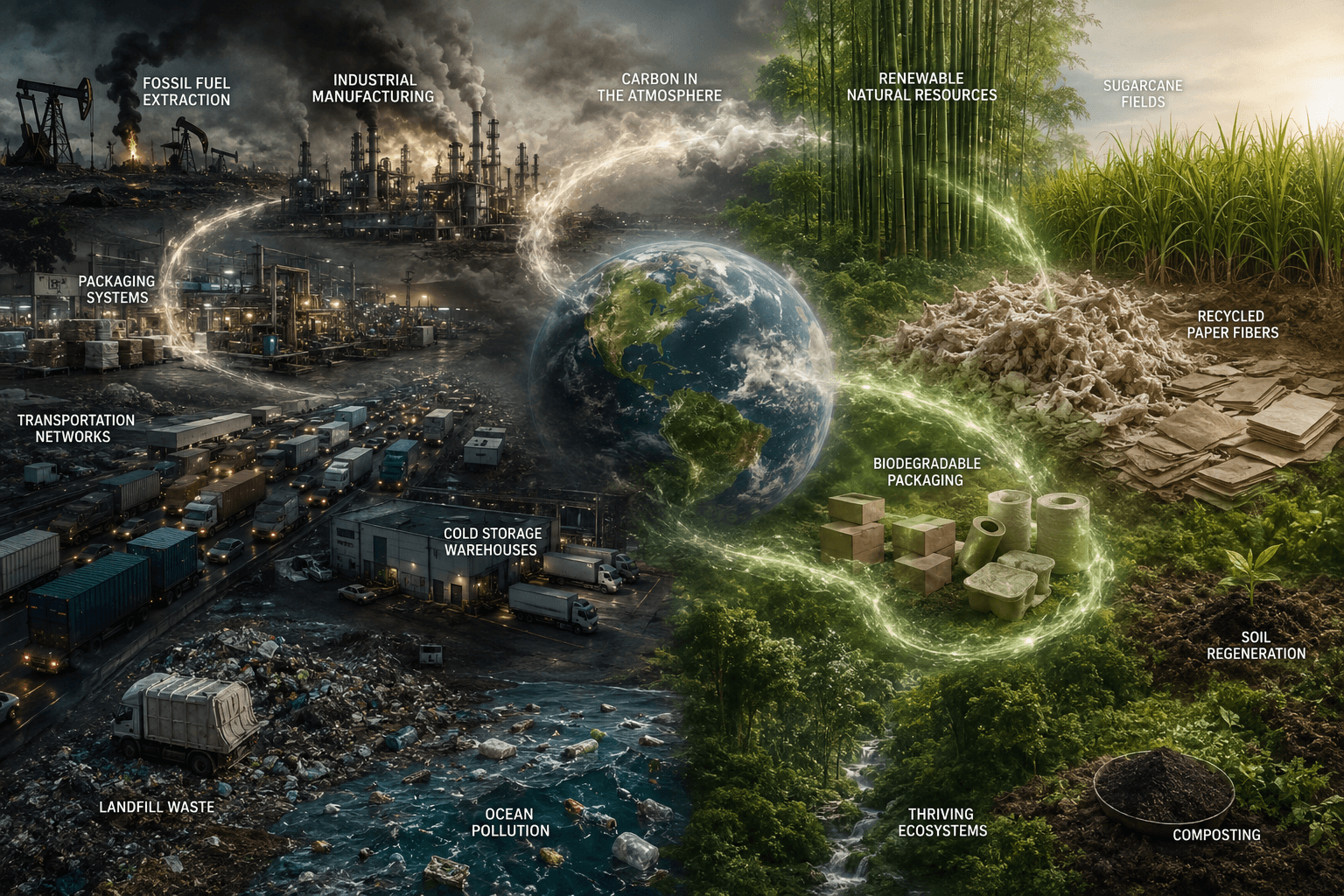
Every product we use carries an invisible trail of emissions—from raw material extraction to manufacturing, packaging, transport, and final disposal. This journey, often overlooked, is known as the carbon footprint, and in the food and packaging industry, it plays a critical role in environmental impact.
The process begins at the factory level, where raw materials are sourced and processed. Conventional materials like plastic rely heavily on fossil fuels, generating significant greenhouse gas emissions during extraction and production. Energy-intensive manufacturing processes further increase the carbon load, especially when powered by non-renewable energy sources.
Next comes packaging and distribution. Products are packed, often using multiple layers of materials, and transported across cities or countries. Long-distance shipping, cold storage, and inefficient logistics all contribute to rising carbon emissions. The heavier and more complex the packaging, the higher the environmental cost.
At the consumer stage, the impact continues. Single-use plastics are often discarded after one use, ending up in landfills or oceans where they remain for centuries. This not only adds to pollution but also releases harmful substances over time.
In contrast, eco-friendly alternatives like Sugarcane Bagasse, Areca Palm Leaf Products, Paper packaging and wooden cutlery significantly reduce this footprint. These materials are naturally sourced, require minimal processing, and decompose quickly without leaving toxic residues. Their lightweight nature also lowers transportation emissions, making them a smarter choice for sustainable businesses.
Why It Matters for Brands
Consumers today are more aware than ever of the environmental impact of their choices. Brands that reduce their carbon footprint gain a competitive advantage, build trust, and align with global sustainability goals. Governments and international markets are also pushing for lower emissions and responsible sourcing.